The Role of Madagascar in Indian Ocean Geopolitics
The Indian Ocean region has always been a focal point of global geopolitics, given its critical sea routes, vast natural resources, and strategic chokepoints. Among the various countries influencing the power dynamics in the region, Madagascar, located off the southeastern coast of Africa, plays a pivotal yet often understated role. As the fourth-largest island in the world, Madagascar's geostrategic location and its abundance of natural resources have garnered the interest of regional and global powers alike. Over the years, the island has grown in significance, shaping and being shaped by the geopolitics of the Indian Ocean.

Historical Context: Madagascar's Position in the Indian Ocean
Historically, Madagascar has always been influenced by its position in the Indian Ocean. The island's history is a melting pot of African, Asian, and European influences due to the migration of peoples from the African mainland, Arab traders, and European colonizers. These interactions shaped the political and cultural dynamics of the island. Madagascar's strategic position between Africa and Asia made it a critical point for maritime trade routes and a point of interest for imperial powers during the colonial era.
From the 19th century onwards, as European powers like France and Britain vied for dominance in Africa, Madagascar became a target for colonization due to its strategic maritime positioning. The French successfully colonized the island in 1896, making it a protectorate and utilizing it as a staging ground for military and trade operations in the Indian Ocean region. This period marked Madagascar's formal entry into the broader geopolitical struggles of the Indian Ocean, a legacy that continues to influence its role today.
Strategic Importance of Madagascar in the Indian Ocean
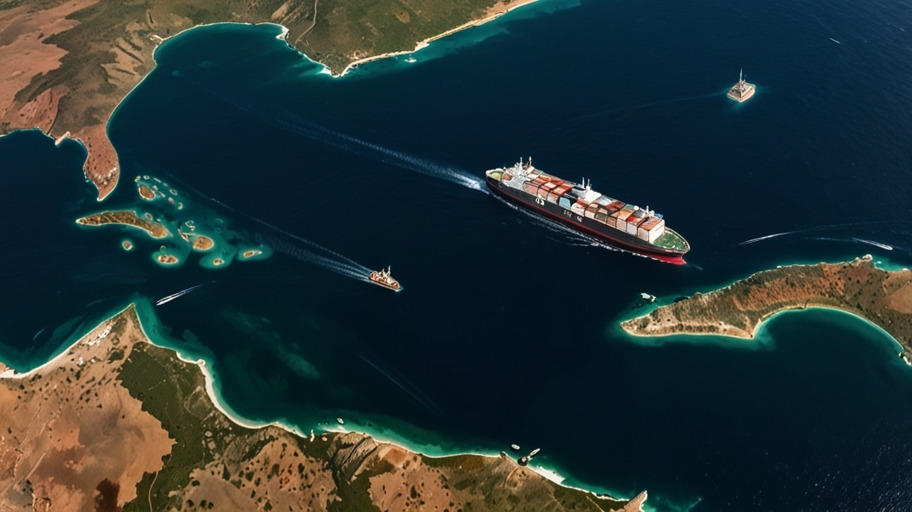
Madagascar occupies a key position at the crossroads of some of the world's most important maritime routes. The Mozambique Channel, which separates Madagascar from mainland Africa, is a vital passage for ships traversing between the Atlantic and Indian Oceans. This channel is frequently used by vessels transporting oil from the Middle East to destinations in Europe and the Americas, as well as other critical that sustain the global economy. Controlling or influencing maritime activities in this region means having a degree of goods leverage over international trade routes.
In modern times, global powers like the United States, China, India, and France have become more focused on the Indian Ocean as it forms the backbone of global maritime commerce. With about 80% of global seaborne trade passing through the region, ensuring the security and stability of the Indian Ocean is crucial to the economic well-being of nations both within and outside the region. Madagascar, given its size and location, is viewed as an essential player in this broader dynamic.
The Mozambique Channel: A Geopolitical Hotspot
The Mozambique Channel is particularly significant because of the global reliance on energy resources passing through it. Madagascar's proximity to the channel, along with its control over portions of the waters, gives it strategic influence in one of the most energy-critical corridors of the world .
Global military powers have recognized this and have taken steps to secure their interests in the region. For example, France maintains a substantial military presence in the Indian Ocean through its territories like Réunion and Mayotte, both of which are close to Madagascar. France's military influence in the region often intersects with Madagascar's, as it aims to ensure the safe passage of French and European vessels through the Mozambique Channel.
Access to Natural Resources
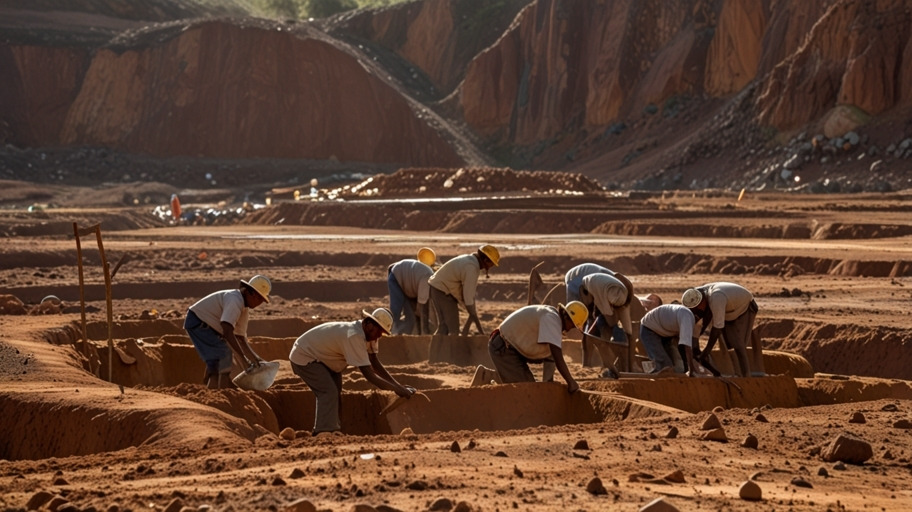
Beyond maritime routes, Madagascar is also rich in natural resources. The island boasts a wide array of minerals, including nickel, cobalt, graphite, and ilmenite, many of which are critical to global industries like electronics, automotive manufacturing, and energy. Madagascar's large deposits of rare earth elements have also caught the eye of global powers, given the increasing demand for these materials in technology production.
China, in particular, has shown a growing interest in securing access to Madagascar's resources. Through its Belt and Road Initiative (BRI), China has been actively pursuing infrastructure and trade deals across the Indian Ocean, including with Madagascar, to ensure a steady supply of natural resources. China's influence in Madagascar, particularly in mining and infrastructure development, reflects its broader strategy of securing critical materials and maritime routes in the Indian Ocean.
Madagascar's Relations with Global and Regional Powers
Given its location and resources, Madagascar has become a key focal point for various global and regional powers, each with different objectives. The country's foreign policy in recent years has aimed to balance these competing interests, with a focus on fostering economic development while ensuring its sovereignty.
France's Continued Influence
Madagascar's colonial past and its proximity to French territories in the Indian Ocean means that France continues to exert a significant influence on the island. France retains military bases in the Indian Ocean and maintains strong diplomatic and economic ties with Madagascar. French companies are also heavily involved in Madagascar's mining sector, particularly in extracting nickel and cobalt.
While Madagascar maintains close relations with France, there have been growing efforts by the Malagasy government to diversify its international partnerships and reduce dependency on its former colonizer. The government has sought to build stronger relationships with other global powers, including China, India, and the United States, to counterbalance French influence.
China's Growing Presence
In recent years, China has significantly increased its footprint in Madagascar as part of its broader geopolitical strategy in the Indian Ocean. China's Belt and Road Initiative has led to the construction of infrastructure projects, including ports and road networks, in Madagascar. Chinese investments in Madagascar's mining industry have also surged, with China seeking to secure critical raw materials like nickel, cobalt, and rare earth elements to support its industrial growth.
Beijing's interest in Madagascar is not limited to economic investments. China's growing naval presence in the Indian Ocean, through the deployment of warships and construction of military bases in the region, demonstrates its strategic interest in controlling key maritime routes. While Madagascar has not openly aligned with China's military objectives, it is clear that Beijing views the island as an essential piece in its broader Indian Ocean strategy.
India's Strategic Outreach
India, another rising power in the Indian Ocean region, has also sought to strengthen ties with Madagascar. India's “Look East” policy, which aims to enhance ties with countries in Southeast Asia and the Indian Ocean, has led to increased cooperation between New Delhi and Antananarivo (Madagascar's capital). India has provided Madagascar with defense equipment and has conducted joint naval exercises in the region to enhance maritime security.
India's strategic interest in Madagascar aligns with its broader goal of countering China's growing influence in the Indian Ocean. As part of its outreach, India has also sought to enhance people-to-people ties through cultural exchanges and development projects. India's Indian Ocean Rim Association (IORA) initiative, which Madagascar is a part of, is an essential forum for regional cooperation on issues such as trade, security, and environmental protection.
The United States and Madagascar
The United States has also been keenly aware of Madagascar's strategic significance in the Indian Ocean. While American involvement in Madagascar is not as pronounced as France or China, Washington has made efforts to engage with the country, particularly on security and counterterrorism issues. The US Navy conducts regular patrols in the Indian Ocean to ensure the free passage of vessels and to counter piracy, which has been a persistent issue off the coast of East Africa and in the Mozambique Channel.
In recent years, the US has also increased its focus on countering Chinese influence in the Indian Ocean. American diplomats and military officials have visited Madagascar as part of broader efforts to foster stronger ties with countries in the region. Additionally, the US Agency for International Development (USAID) has provided significant aid to Madagascar, particularly in areas such as health, education, and environmental protection.
Environmental Geopolitics and Madagascar
Madagascar's role in Indian Ocean geopolitics is not just about military and economic concerns but also involves environmental considerations. The island is one of the world's most biodiverse places, home to thousands of species found nowhere else on Earth. However, deforestation, illegal logging, and mining activities have severely threatened Madagascar's unique ecosystems.
International environmental organizations, along with global powers like the US and the European Union, have pushed for greater conservation efforts in Madagascar. These efforts often intersect with geopolitical interests, as ensuring environmental sustainability in Madagascar is critical to maintaining its long-term economic stability. The island's rich marine biodiversity, including its coral reefs and fisheries, are also of significant concern to the international community.
Additionally, climate change poses a severe threat to Madagascar's long-term stability. Rising sea levels, changing weather patterns, and the increased frequency of natural disasters such as cyclones have the potential to displace millions of people and destabilize the region. Addressing these environmental challenges is not just a matter of local governance but has become a focal point of global geopolitical discussions, with countries like France, China, and India playing an active role in supporting Madagascar's environmental initiatives.
Challenges to Madagascar's Geopolitical Aspirations
Despite its strategic location and rich resources, Madagascar faces significant challenges that limit its ability to fully leverage its geopolitical potential. Chronic political instability, corruption, and weak governance have long plagued the country. Over the past decades, Madagascar has experienced multiple coups, political unrest, and contested elections, which have hindered consistent policy implementation and economic growth.
The country's infrastructure is also underdeveloped, limiting its ability to fully participate in regional and global trade. Although foreign investments, particularly from China, have helped improve some of the island's infrastructure, much more needs to be done to unlock Madagascar's economic potential.
Additionally, while Madagascar is rich in natural resources, many of its citizens continue to live in poverty. The unequal distribution of wealth and resources, coupled with inadequate social services, has led to widespread discontent and periodic protests. To achieve its geopolitical aspirations, Madagascar must address these domestic issues and ensure that its wealth benefits all its citizens.
Conclusion: Madagascar's Geopolitical Future in the Indian Ocean
Madagascar's role in the Indian Ocean geopolitics will continue to grow in the coming years. As global powers vie for control over key maritime routes, natural resources, and influence in the region, Madagascar's strategic importance will only increase. However, the island's ability to capitalize on its geopolitical position will depend on its ability to address internal challenges such as political instability, economic inequality, and environmental degradation.
By balancing its relationships with global powers such as France, China, India, and the United States, Madagascar has the potential to play a crucial role in shaping the future of the Indian Ocean region.